Traditional Marketing (Pre-20th Century to Mid-20th Century)
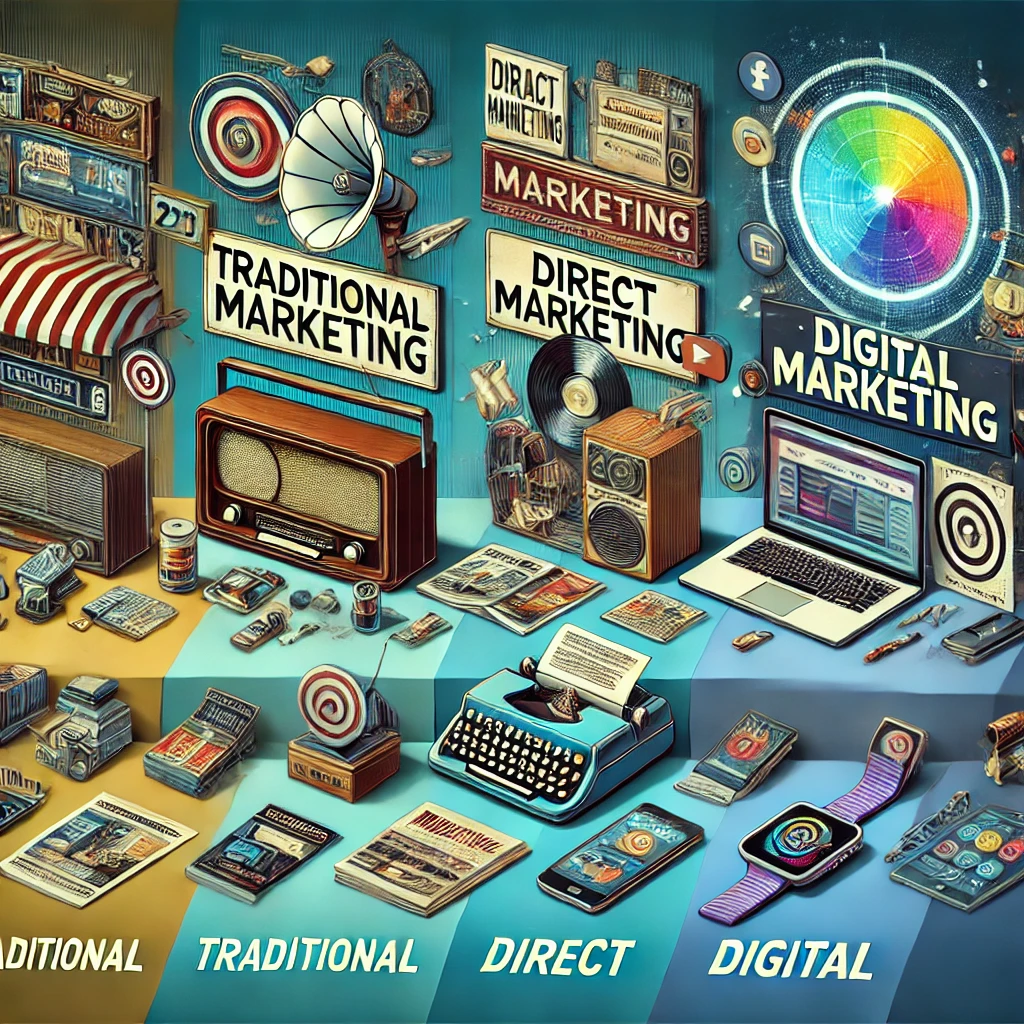
Traditional marketing methods have deep historical roots. Before the 20th century, marketing was primarily conducted through word-of-mouth, physical storefronts, and simple print advertisements in newspapers, magazines, and flyers. Billboards and posters were familiar sights in towns and cities, serving as visual prompts for consumers. These marketing messages were one-directional, emphasizing product features and benefits without expecting immediate consumer feedback. Brands depended heavily on the power of direct sales and personal relationships to build customer loyalty and drive sales.
Direct Marketing (Mid-20th Century to Late 20th Century)
In the mid-20th century, they witnessed the emergence of direct marketing, a more targeted approach that included direct mail campaigns, telemarketing, and door-to-door sales. Marketers began compiling customer databases and segmenting audiences to personalize communications. This era shifted towards direct response advertising, where infomercials, catalogues, and direct mail coupons became popular. Consumers could now engage with brands more interactively, responding to offers through phone calls or mail-ins, which allowed marketers to measure the effectiveness of their campaigns more accurately.
Digital Marketing (Late 20th Century to Early 21st Century)
The internet brought about a seismic shift in marketing strategies, giving rise to digital marketing. Email marketing became a cornerstone, enabling brands to reach consumers directly in their inboxes. Websites became essential for businesses, offering a new platform for advertising and customer interaction. Search engine optimization (SEO) and pay-per-click (PPC) advertising emerged as vital strategies to drive website traffic and generate leads. Social media platforms like MySpace and later Facebook, Twitter, and LinkedIn transformed the landscape, allowing brands to engage with consumers in real-time. The proliferation of smartphones further fueled mobile marketing, introducing location-based targeting and app advertising, making marketing efforts more dynamic and immediate.
Content Marketing and Inbound Marketing (Early 21st Century to Present)
As digital marketing matured, content marketing and inbound marketing gained prominence. Content marketing focuses on creating valuable, relevant content to attract and engage audiences. This era saw brands investing in blogs, videos, podcasts, and other forms of content to build relationships with customers and establish themselves as thought leaders. Inbound marketing methodologies prioritize attracting customers through content creation, SEO, and social media rather than interruptive advertising. Marketing automation platforms like HubSpot, Marketo, and Pardot emerged, facilitating lead nurturing and personalized customer interactions at scale, enhancing the efficiency and effectiveness of marketing efforts.
Data-Driven Marketing and Personalization (Present to 2024)
Currently, data-driven marketing and personalization are at the forefront of marketing strategies. Predictive analytics, machine learning, and artificial intelligence enable marketers to gain deeper insights into customer behaviour and preferences. Personalization has become a central focus, with brands leveraging data to deliver tailored messaging, product recommendations, and experiences. Omnichannel marketing strategies aim to create seamless customer experiences across multiple touchpoints, including online, offline, mobile, and social channels. Emerging trends like voice search optimization and augmented reality (AR) marketing are reshaping consumer engagement in the digital landscape. Additionally, sustainability and ethical marketing practices are gaining prominence as consumers increasingly value brands’ social and environmental responsibility.
Conclusion
The evolution of marketing has been characterized by a shift towards more targeted, personalized, and data-driven approaches driven by advancements in technology and changes in consumer behaviour. From traditional print advertisements and word-of-mouth to the sophisticated omnichannel strategies of today, marketing continues to adapt to the changing landscape, always striving to meet consumers where they are and anticipate their needs.
Looking Forward
For businesses navigating the contemporary marketing environment, it’s essential to consider how these evolving strategies can be tailored to their specific needs. Whether leveraging advanced data analytics for personalized customer experiences or adopting ethical marketing practices to align with consumer values, understanding and adapting to these trends is essential.
Let’s discuss how these strategies can be applied to your business today. Chat with APG74 to explore your options and craft a marketing approach that aligns with your business goals and customer expectations.
Let’s start your journey with APG74 — where we Attract with innovation, Pitch with precision, and Grow together with every step you take.