The Evolution of Communication: From Efficiency to Overload – How We Can Clean Up Our Conversations in 2025
In the days of rotary phones and handwritten letters, communication was a deliberate act. Every call, every letter carried purpose. Fast forward to 2025, where communication is a relentless stream of emails, notifications, messages, and spam. The irony? The tools designed to connect us often leave us overwhelmed, confused, and disconnected.
So, how did we get here? And more importantly, how can we fix it? Let’s explore the journey from past communication tools to today’s digital chaos, unpack the root causes of spamming, and discuss strategies to clean up our conversations—for the sake of our businesses, our inboxes, and the planet.
The Charm of Simplicity: Communication in the Past
Do you remember the days of fixed phone lines? You’d pick up the phone, and the caller might be anyone—a family member, a friend, or a business associate. No caller ID meant no preconceived notions. Conversations were intentional, focused, and often professional.
And letters? Writing a letter wasn’t just sending information; it was an investment. You’d buy a stamp, carefully write the recipient’s address, and craft a message tailored to them. Businesses, too, segmented their audiences meticulously—because printing and mailing were expensive.
This thoughtful approach ensured that every message mattered. There was no room for spam in a world where communication cost time and money.
The Digital Age: Efficiency Meets Excess
Then came the internet, email, and smartphones. Suddenly, communication was instantaneous and (seemingly) free. Why pay for postage when you could send an email to hundreds—or thousands—of recipients with a single click?
But this shift created a problem: the overabundance of communication. Here’s how it unfolded:
- No Cost = No Filters
With no significant cost barrier, businesses began sending emails, texts, and notifications indiscriminately. Why spend time segmenting an audience when you can blast your message to everyone? - Quantity Over Quality
Many marketers adopted a “spray and pray” approach, hoping that if they sent enough emails, at least a few would land. This strategy might yield some results, but at what cost? - The Spam Spiral
As inboxes filled with irrelevant messages, recipients grew weary. Open rates declined, trust eroded, and businesses compensated by… sending more messages.
The Hidden Costs of Spam
Spam isn’t just an annoyance; it’s costly—for individuals, businesses, and even the environment.
- Lost Time
How many hours do you spend deleting emails, blocking unwanted calls, or sifting through LinkedIn messages? Now multiply that across millions of professionals. The time drain is staggering. - Business Inefficiency
For businesses, low engagement rates mean wasted effort and resources. Spamming also damages brand credibility. Why would I trust your business if you can’t respect my time? - Environmental Impact
Here’s a lesser-known fact: storing and processing data requires energy. Every unnecessary email, bloated CRM database, and redundant LinkedIn message contributes to the carbon footprint of data centers.
Have you ever calculated the cost of your CRM storage? When was the last time you cleaned your database? These questions aren’t just about efficiency—they’re about sustainability.
The Modern Dilemma: To Pick Up or Not to Pick Up?
Today, we’re all caught in a paradox. Should I answer that unknown call? Open that email? Respond to that LinkedIn message?
On one hand, ignoring communications might mean missing out on valuable opportunities. On the other, engaging with irrelevant messages wastes time. This constant decision-making creates fatigue and erodes trust in communication channels.
Where Did We Go Wrong?
The root of the problem lies in one word: segmentation. Or rather, the lack of it.
In our rush to reach as many people as possible, we’ve abandoned the practices that made past communication effective:
- Knowing your audience
- Crafting personalized messages
- Prioritizing quality over quantity
The result? A diluted message that fails to resonate with anyone.
Fixing the Communication Crisis in 2025
It’s time to reclaim the art of meaningful communication. Here’s how:
- Segment Your Audience
Invest in understanding your audience. Use CRM tools to create detailed profiles and segment them based on relevant criteria—industry, interests, behavior, etc. - Prioritize Quality Over Quantity
Instead of sending 1,000 generic emails, send 100 highly targeted ones. Personalized communication is more likely to engage recipients and build trust. - Clean Up Your Data
Regularly audit your CRM and email lists. Remove inactive contacts, consolidate duplicate entries, and ensure your database is lean and accurate. - Respect Privacy and Preferences
Give people the option to opt out of specific types of communication. Respect their choices—this builds credibility and trust. - Reduce Digital Clutter
Remember, every piece of data stored in your CRM or email system has a cost. By keeping your data clean, you’re not just saving money—you’re reducing your environmental impact.
The Call to Action: Let’s Communicate Better
Imagine a world where communication is efficient, respectful, and impactful. A world where I don’t have to spend hours cleaning my inbox, and you don’t have to wonder why your emails aren’t converting.
To get there, we must commit to:
- Sending fewer, better messages
- Cleaning up our data
- Treating communication as a tool for connection, not noise
In 2025, let’s stop spamming and start building meaningful relationships. After all, you and I are in the same situation—I want to contact you, and you want to contact me. Let’s make it worth both our time.
Final Thought: Nostalgia Meets Innovation
Maybe it’s time to take a page from the past. What if we approached email like a letter, with care and intention? What if we treated phone calls like a privilege, not an intrusion?
The tools may have changed, but the principles remain the same. Good communication is about respect, relevance, and relationships.
Let’s clean up our conversations and make 2025 the year we reconnect—with purpose
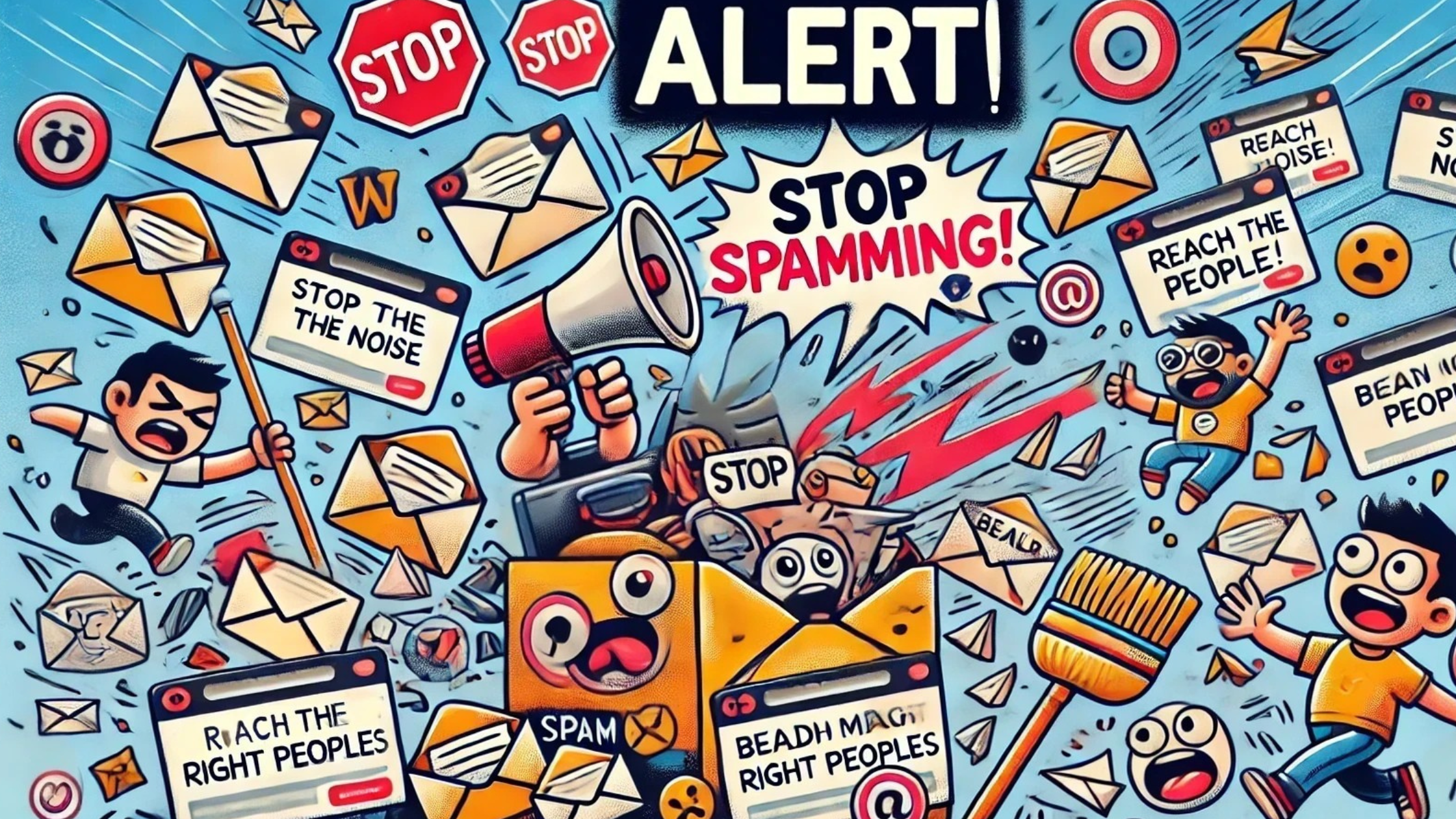
🚨 ALERT: STOP SPAMMING! 🚨
“When everyone is shouting, no one gets heard.”
Let’s clean up our communication:
📩 Stop the noise.
📞 Reach the right people.
🤝 Build meaningful connections.
Because if you can’t reach me, and I can’t reach you, how will we ever connect?